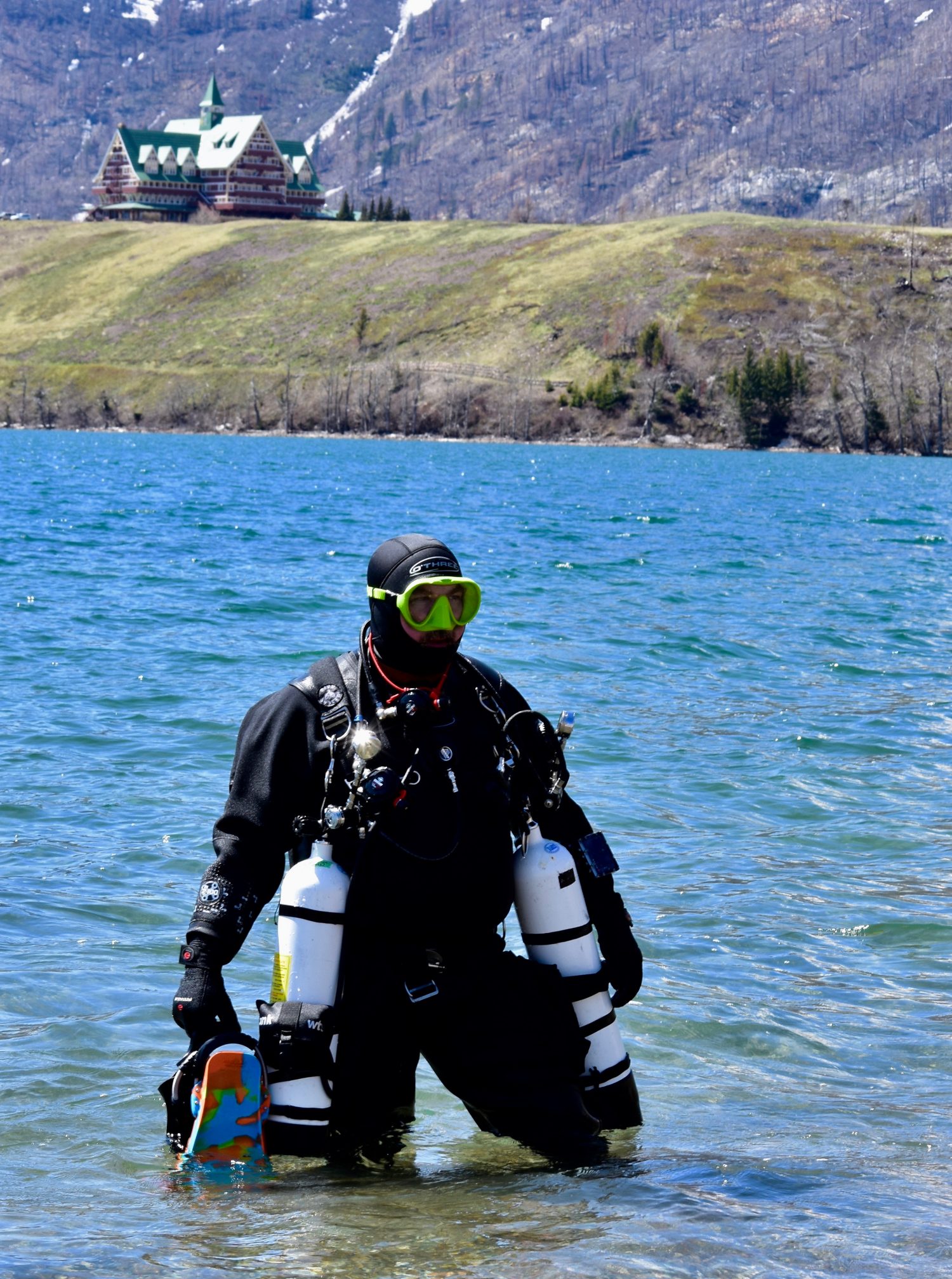

Have you ever pondered the question, “How best should I prepare (fitness) for the next dive season?” I will make a bold prediction, you never considered – on your own – and no one ever suggested you should consider Strength Training.
So, how will this help you as a diver?
Increasing strength will increase your overall ability to endure muscular demands, increase your bodies’ efficiency and make you more durable. So you can lift more cylinders, haul more gear, climb more ladders and work harder/longer.
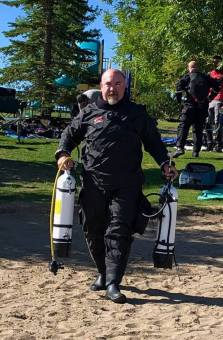
If you take 24 kick cycles to move 100 feet, at 100lbs strong. You train for a month and increase your strength to 200lbs. You should now be able to move that same distance in 18 kick cycles, at 300lbs strong only 12 kicks… Your increased strength and efficiency from the gym will have real-world effects on your diving, beyond the other health benefits, although there will asymptotic improvements in kick-cycle efficiency…
Strength Training YouTube Video
Fitness for Scuba diving is a multifaceted task, much like diving itself. Muscle strength is the basis of all our interaction with the physical world. Muscles translate the brains instructions into movement. Strength is the most fundamental measure of the ability to interact physically with the world.
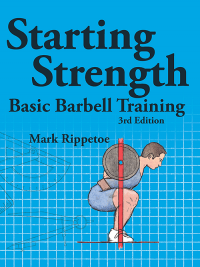
If you want to be get better at moving, the best thing you can do (other than training the specific dive skills) is get stronger… “Strength is the ability to produce force with your muscles against an external resistance.”
Power production is measured by how much weight you can move (pounds/kg on a barbell). Increasing capacity for power production by strength training is the most direct way to increase capacity for maximal efforts or increased efficiency at sub-maximal efforts. Maximal effort is unusual in daily life, but walking into the water geared-up or finning underwater are sub-maximal efforts.
We’ve all been told – repeatedly – that jogging, distance swimming or cycling are the best cardio routines to train for diving. Yet “endurance” sports are anathema to muscle mass and there is ample evidence that heavy lifting improves cardio conditioning without the need for long drawn out (and injury-laden) endurance events.
In other words, you can spend 55 minutes, 3 times a week and get significantly stronger.
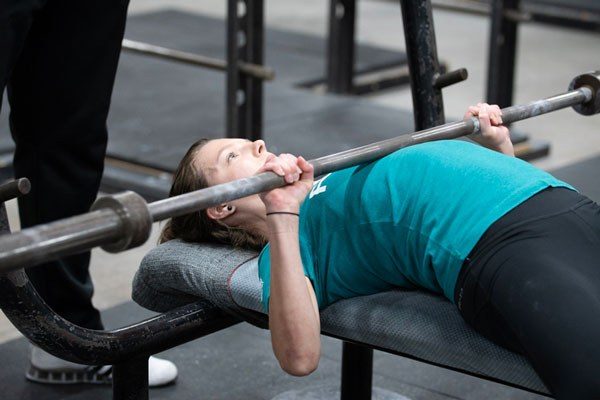
This training will not involve a lot of stretching, no running and no cycling (maybe 3 minutes on a rower for warm-up, but that is a choice)…. Squat, Bench press, Deadlift and Military Press (standing overhead press) are the fundamental exercises. Maybe add in lat-pull-downs and/or chin-ups.
Strength training works neurologically, teaching the nerves to recruit more muscle fibres for an action. Strength increases movement efficiency as well as making you stronger. Strength training will also increase muscle mass, although not with the bulging like Arnie or The Rock. Training for over-sized muscles (body building/hypertrophy) is a different discipline from strength training. To satisfy yourself, do a bit of research on Youtube and you’ll see relatively non-muscle-y folks lifting very heavy weights.
If you’re going to strength train, I recommend learning the lifts from a coach. Good coaches can be hard to find, but it’s worth your effort.
Resources:
 UcanSCUBA